AI right now is just crazy. AI agents everywhere, platforms promising to automate almost every task you can imagine, new tools launching constantly, and use cases that go way beyond what most of us were thinking about just a couple of years ago.
I already knew AI was moving fast, but after attending Ai4, I realized the ecosystem is even bigger, and evolving even faster than I had imagined.
Ai4 is one of the largest artificial intelligence conferences in the U.S., held in Las Vegas, Nevada. This year, Ai4 2026 took over The Venetian Expo, bringing together thousands of people building, implementing, investing in, and simply trying to better understand AI.
So, this blog is all about recapping some of the highlights, sharing what stood out to me, what I learned from the people I met, and a few things I would definitely do again, or differently, next time.
Ai4 Conference 2026
Ai4 brings together a very interesting mix of people: engineering and technical leaders, CEOs and founders, AI agent and platform providers, investors, companies exploring how to implement AI, and people who simply want to understand what all the AI hype means for their businesses. There were even parents walking around with their children, which was honestly pretty funny and cute to see.
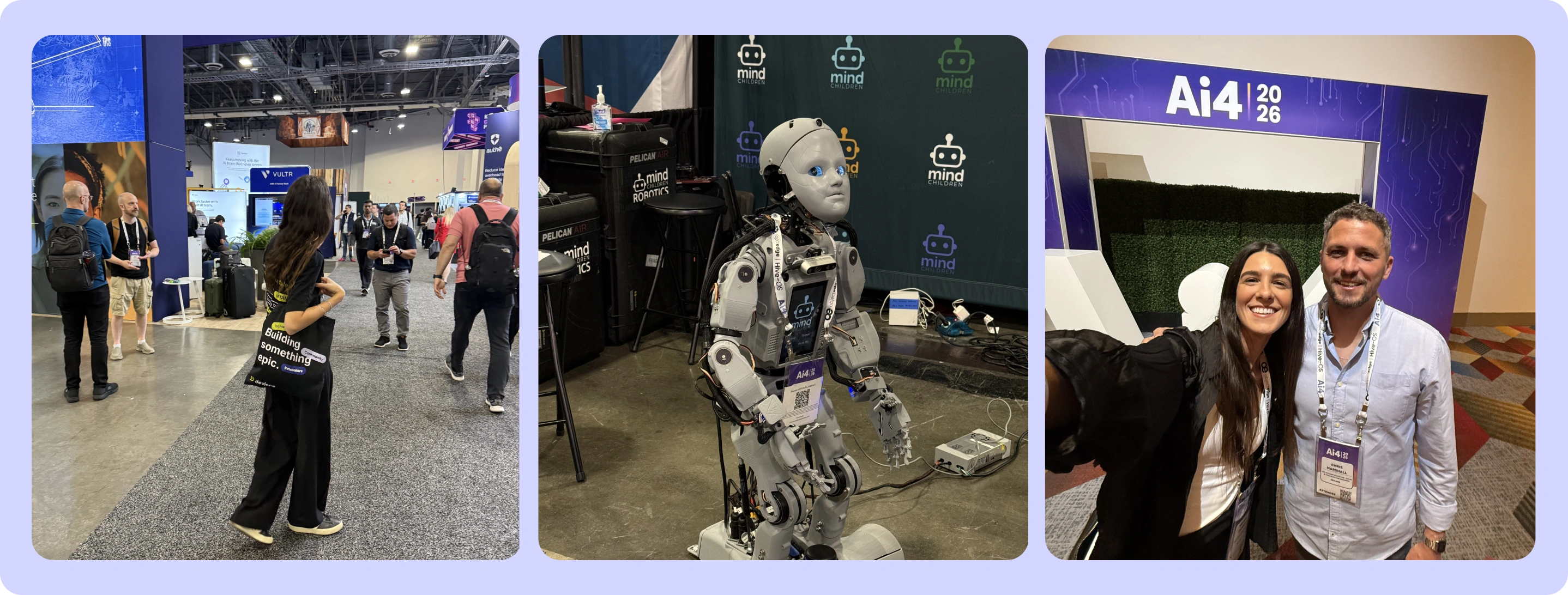
This year's conference hosted more than 12,000 leaders and tech enthusiasts, and let me tell you, it definitely felt like 12,000 people. The 1:1 meeting areas were constantly busy, the expo floor was packed with booths, and there were workshops, talks, demos, and networking happening everywhere.
The entire setup was designed around having thousands of people interacting, exchanging ideas, discovering new technologies, and, probably the best part for me, connecting with extremely interesting people.
Walking through the expo floor was an experience on its own. You could go from seeing an AI agent analyzing massive amounts of data to a robot moving around the venue, and then sit down with a company leader trying to figure out how AI should actually fit into their organization.
That contrast was probably one of the most interesting parts of Ai4. There is an enormous amount of innovation happening, but there are still just as many questions about how to turn all of that innovation into actual business value.
My key takeaways from Ai4
There were many takeaways I personally brought home from this experience, both professional and personal. When it comes to technology, the changing industry we're operating in, and how companies are actually implementing AI, these were some of the biggest ones for me:
AI agents and specialized AI platforms are everywhere
There is an explosion of agents built to solve very specific business challenges, particularly around data, analytics, automation, customer service, software development, and decision making. The conversation is moving beyond simply "using AI" toward finding the right AI solution for a specific problem.
AI overload is becoming a challenge of its own
With so many new agents, platforms, and models appearing constantly, the challenge isn't accessing AI anymore. It's deciding what is actually worth implementing. Companies need to understand where AI can create measurable value instead of adopting new tools simply because they're available.
Robotics is becoming much more practical
Robotics had a strong presence throughout the conference, from industrial robotic arms to educational robots for children, autonomous package transportation, and even mobile robots designed for photography and customer experiences. It was interesting to see AI moving beyond software and becoming increasingly present in the physical world.
AI governance, cybersecurity, and data protection have become top priorities
This was probably one of the topics that stood out the most to me. The conversation isn't only about how quickly companies can adopt AI anymore. It's also about how they can do it securely. Governance frameworks, cybersecurity, compliance, access to information, and protecting sensitive data are becoming fundamental parts of any serious AI strategy.
The expectations for engineering talent are changing
Companies don't only need "AI engineers." Increasingly, they need experienced engineers across disciplines who understand how to work with AI, integrate it into their workflows, evaluate its output, and use it to improve speed and quality. Knowing how to take advantage of AI is becoming part of what makes someone a stronger engineer.
Prompting and AI native development are becoming real skills
Better prompting, AI assisted software development, agents, and even "vibe coding" came up constantly. Developers are increasingly collaborating with AI throughout their workflows rather than simply using it as an occasional coding assistant.
Enterprise AI adoption is still a work in progress
One thing that surprised me was hearing from leaders at very large organizations, including companies with tens of thousands of employees, who are still working on getting their teams to actually adopt AI. Technology might be moving incredibly fast, but organizational change takes much longer.
The conversation has shifted from technology to outcomes
A lot of companies weren't really selling the technology itself. They were selling what it could achieve: increased productivity, reduced costs, faster execution, better decisions, or improved customer experiences. Ultimately, companies don't want AI for the sake of having AI. They want results.
We're moving toward ecosystems of agents
Instead of one AI model doing everything, more sophisticated implementations are using multiple specialized agents and layers that interact with one another to complete more complex workflows. That was fascinating to see, and sometimes a little hard to keep up with as someone without a technical background!
On a more personal note
Attending Ai4 as Chief Marketing Officer at Devlane was an incredibly interesting experience. I had the opportunity to interact with engineering leaders, CEOs, founders, tech enthusiasts, and people who genuinely wanted to connect and exchange ideas. More than anything, I enjoyed hearing how different companies are implementing AI in their day to day operations, from automating repetitive tasks to building agents and much more sophisticated implementations that, I'll admit, sometimes became difficult for me to follow.
But that's also part of what makes attending these conferences so valuable. As a marketing leader, having 1:1 conversations with company leaders gives me something I can't get from a dashboard, a report, or a market study: the opportunity to hear firsthand what companies are struggling with right now.
A few challenges came up again and again:
- Keeping up with AI is becoming overwhelming: AI brings enormous opportunities, but it also creates pressure. New tools, agents, models, and capabilities appear constantly, and many leaders are trying to figure out what to implement, what to ignore, and how to avoid falling behind. There is almost a feeling that everyone needs to be doing more with AI, while at the same time, nobody has enough time to evaluate everything that's coming out.
- Companies need great talent, but the definition of great talent is changing: There are plenty of engineers in the market, but fewer who truly know how to use AI to make a meaningful difference, whether that's improving development velocity, strengthening QA, automating workflows, or implementing AI capabilities directly into products. Technical experience still matters, probably more than ever, but now it comes with another expectation: knowing how to use AI effectively as part of the job.
- Security and operational control matter more than ever: Remote work has opened incredible opportunities for distributed teams, but AI adds another layer of complexity around cybersecurity, identity, hardware, and access to sensitive information. This came up in several conversations, particularly around the value of hiring talent across Latin America while still having the ability to centralize teams through operational hubs, secure hardware provisioning, and office setups when needed. This is something we support at Devlane as part of our partnership with clients.
- The companies moving fastest aren't necessarily using the most AI: They're being intentional about it. One thing I took away from many conversations was that adopting ten different tools doesn't automatically make an organization AI first. The companies making real progress seem to be the ones identifying specific problems, experimenting, measuring results, and scaling what actually works.
- And personally, I came home with a much longer marketing AI to do list: There were so many interesting ideas around agents for marketing workflows, video generation, global content creation, prompt libraries, research, automation, and content repurposing. Some I had seen before, others were completely new. Either way, I definitely left Vegas wanting to experiment with much more.
Beyond Ai4: A very tech filled week in Vegas
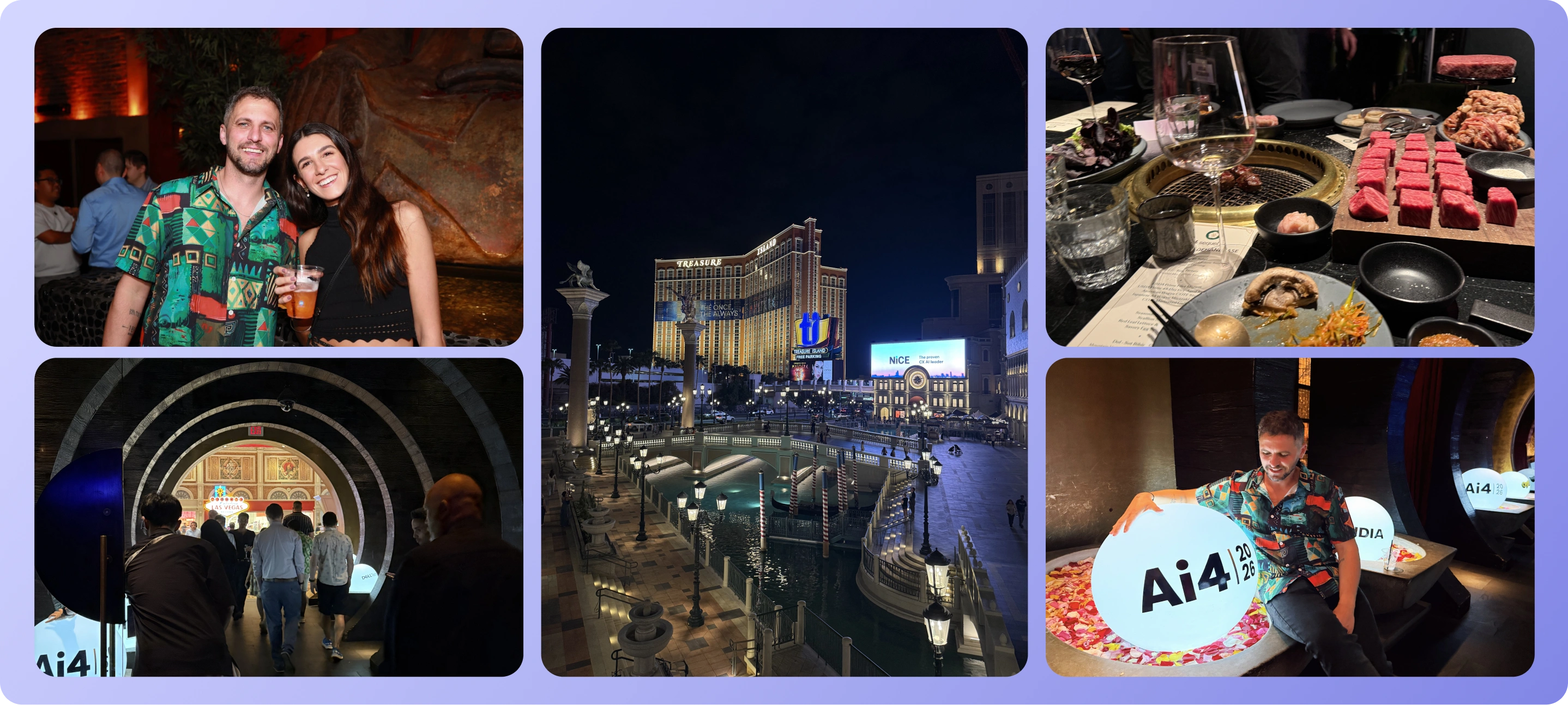
Ai4 wasn't the only major tech conference happening in Las Vegas that week. Black Hat was happening at the same time, which meant the entire city seemed to be filled with people from the technology industry. I kept bumping into fellow attendees in elevators, casinos, restaurants, or simply walking around Vegas with their conference badges still on. It created a really fun atmosphere and, more importantly, even more opportunities to meet interesting people outside the conference itself.
There were also plenty of happy hours, mixers, dinners, and side events happening throughout the week, which are absolutely worth taking advantage of if your energy allows it. Mine definitely struggled to keep up at times! One of my personal highlights was a CMO Dinner hosted by Sequel.io , Demandbase, and 1Mind. It was a smaller gathering dedicated entirely to marketing and business leaders, which made for very different conversations from those happening on the Ai4 expo floor.
Personally, it was also fun to be on the guest side for once. I'm usually the one organizing events, checking that everything is running smoothly, and running around while everyone else enjoys the mixer. This time, I could just sit down, meet people, have great conversations, and enjoy the experience. The Ai4 closing party at TAO was another great opportunity to connect in a much more relaxed environment. After days of scheduled meetings, expo booths, workshops, and conference conversations, having a completely different setting made interactions feel much more casual.
One very practical lesson if this continues to be part of Ai4 every year: plan a different outfit. After spending the entire day at a conference, you'll probably appreciate changing before going to a closing party instead of arriving looking like you just walked off the expo floor. Also, after several days of meetings, networking, dinners, and events, conserving some energy becomes a strategy of its own. You don't have to be everywhere, but choosing the right events can add a lot to the overall conference experience.
Tips for your next Ai4
If you're thinking about attending Ai4 next year, there are a few things I would absolutely recommend based on my experience. It's a huge conference, and going in with a plan can make a massive difference in how much value you get from those few days.
1. Schedule meetings before you arrive
This was probably the biggest highlight for me. Having a full agenda of 1:1 meetings already planned made the conference significantly more valuable. Ai4's app allows attendees to discover people and coordinate meetings in advance. I even met a CEO at the conference who didn't know this was possible and ended up showing him how to use it. Don't wait until you're already there to start networking.
2. If you're a provider, consider having a booth
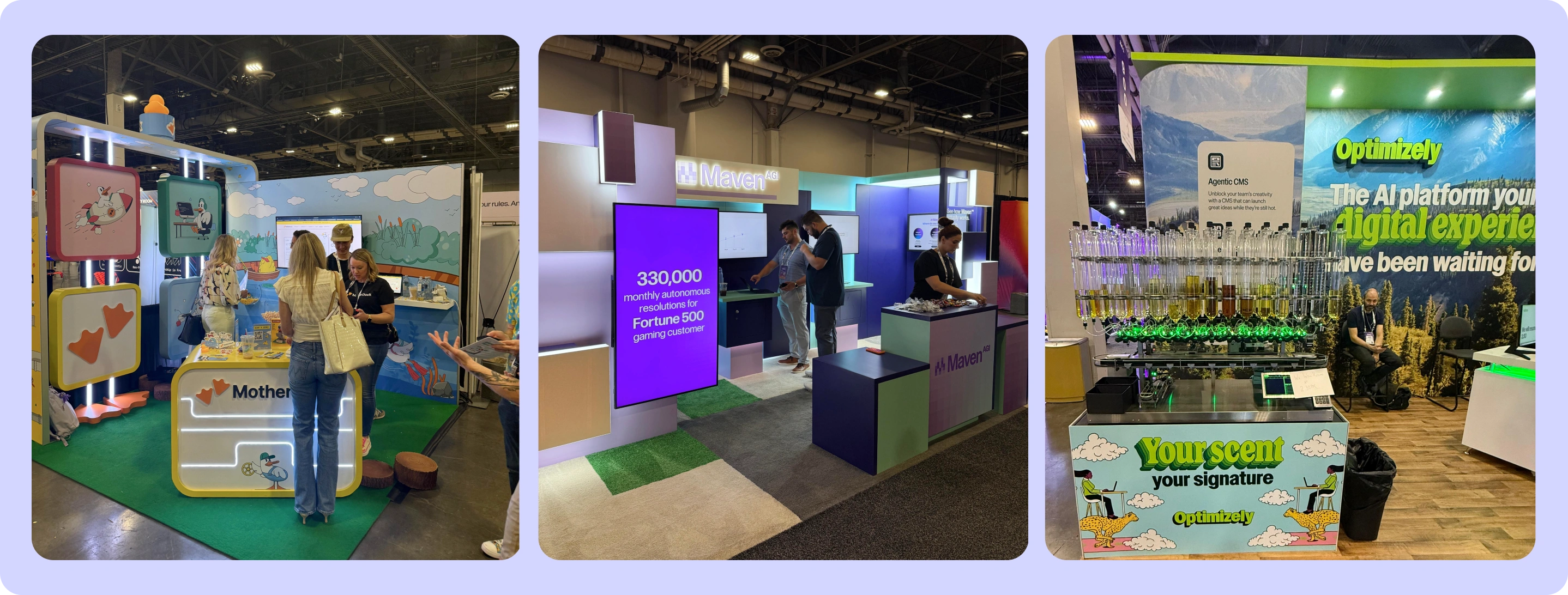
If you're selling an AI platform, agent, service, or simply looking to position your company within the AI ecosystem, I think having a booth can make a lot of sense. Most of the exhibitors I spoke with were very positive about the experience and felt the investment had been worthwhile.
3. Have human conversations, not competing sales pitches
You don't want every conversation to turn into that Spider Man meme where you're pitching them while they're pitching you. Some of my best conversations happened when we simply talked about what each person was building, what challenges they were facing, and how they were using AI.
One fellow attendee, actually stopped me and said, "Thanks for not trying to sell me the entire time and just having a nice human conversation." That stuck with me.
4. Wear comfortable shoes, seriously.
You're going to spend a lot of time standing and walking. The networking areas could get crowded, and seating wasn't always easy to find outside of designated lunch areas. Comfortable shoes or sneakers are 100% non negotiable. Your feet will thank you.
5. Take notes and save your connections immediately
After dozens of conversations, it's surprisingly easy to forget who said what. Write down relevant insights, challenges, follow ups, and anything you want to remember. Also, connect on LinkedIn or through the app while you're still talking.
The attendee QR codes weren’t working, so having another way to save the connection was important. The last thing you want is to have a great conversation and then realize you have no idea how to find that person again.
6. If you're exhibiting, find a way to visually stand out
After walking through hundreds of booths, a lot of AI agent pitches can start sounding very similar. The booths that caught my attention were usually the ones doing something creative, interactive, or visually different. When everyone is talking about AI, simply saying you use AI isn't enough to stand out.
7. Leave some room for spontaneity
A packed agenda is valuable, but some of my most interesting conversations weren't scheduled. Conferences like Ai4 are one of those places where the person standing next to you waiting for coffee, sitting nearby at lunch, or sharing an elevator might end up being one of the most valuable connections of the week.
Wrapping Up
Ai4 was intense, sometimes overwhelming, incredibly interesting, and definitely worth the experience. I went there expecting to learn more about AI and connect with leaders, but I definitely came back thinking much more about the challenges that come with actually implementing it: choosing the right tools, finding the right talent, protecting information, getting teams to adopt new ways of working, and ultimately proving that all of this technology is creating real value.
And maybe the biggest takeaway for me was a slightly ironic one. At a conference entirely dedicated to artificial intelligence, the human conversations were still the most valuable part.
Technology is changing incredibly fast. Agents will get better, new platforms will appear, and development workflows will continue evolving. Some of the tools everyone was talking about this year might look completely different by next year's conference.
But sitting down with someone, understanding what they're building, hearing the challenges they're facing, exchanging ideas, and creating a real connection still matters. For me, that's what made Ai4 2026 worth it.
And yes, I'm already curious to see how different everything will look a year from now!

Other Blog Posts
.webp)
How to Build an AI Agent for Production