For many candidates, preparing for an interview means revisiting frameworks, rehearsing algorithms, or memorizing common interview questions. While technical preparation is important, after years of working closely with candidates and U.S.-based clients, we’ve learned that what truly makes the difference goes far beyond the tech stack.
We work daily with LATAM engineers preparing for interviews with U.S. companies, while also partnering closely with teams on the hiring side. This dual perspective gives us a clear view of what interviewers are truly evaluating and where candidates can stand out, even when competing against equally strong technical profiles. This article is not a generic list of interview tips. Instead, it’s an honest look at how we evaluate talent, what we pay attention to during interviews, and what U.S. companies consistently value when hiring nearshore.
How we evaluate talent during technical interviews
From our point of view, interviews are not isolated events. They are part of a broader process where we aim to understand how a candidate would perform in a real project, working alongside U.S.-based teams, product managers, and stakeholders.
A technical interview is rarely just about answering technical interview questions correctly. From my perspective as a technical recruiter, interviews are a space to understand how a candidate thinks, communicates, and works in real-life scenarios.
Our evaluation process combines technical depth with professional maturity. We look at how candidates:
- Explain their decisions and trade-offs
- Communicate clearly with English speakers
- Demonstrate ownership over their work
- Show consistency between their seniority level and real-world experience
This is why two candidates with the same technical background can have very different outcomes.
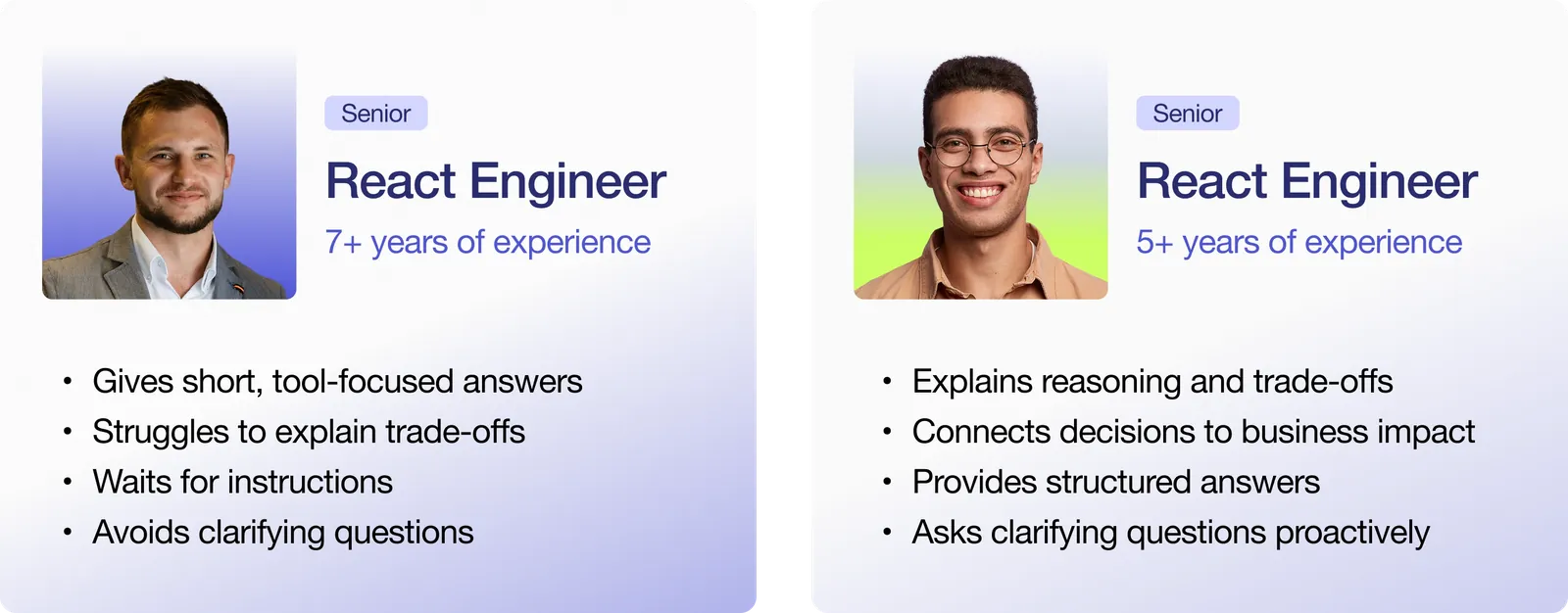
What we look for beyond hard skills:
Communication and Clarity
Communication is often underestimated by candidates, yet it is one of the most decisive factors in interviews with our clients. Strong communication is one of the biggest differentiators in interviews with U.S. companies. Beyond having an advanced level of English, candidates are expected to communicate with clarity and confidence. Structuring answers, explaining trade-offs, and asking thoughtful questions demonstrate real readiness to collaborate in distributed teams.
Many job interview questions are intentionally open-ended. Interviewers want to see how candidates reason, not just whether they know the “right” answer.
Real Seniority
One of the most common misconceptions we see is the belief that seniority is defined only by years of experience or by the stack used in previous roles. Titles don’t always translate across markets. During interviews, we focus on whether a candidate’s seniority is reflected in their autonomy, problem-solving ability, and impact.
Senior candidates are expected to:
- Make architectural decisions
- Anticipate risks
- Guide less experienced teammates
Mid-level candidates, on the other hand, should demonstrate solid execution and growing independence.
Ownership and accountability
Ownership is closely tied to trust, something U.S. companies value deeply when hiring remote talent. U.S. companies value candidates who take responsibility for outcomes. This shows up when candidates talk about past projects using “we” and “I” appropriately, explain mistakes openly, and describe how they improved processes or systems over time.
Proactivity
Proactivity is often what separates solid performers from candidates who truly stand out during interviews. North American companies look for people who don’t wait to be told what to do, but instead identify problems, propose solutions, and take initiative within their scope. In interviews, this usually appears when candidates talk about improvements they suggested, risks they raised early, or situations where they stepped outside their formal responsibilities to move a project forward.
Showing proactivity signals maturity, ownership, and readiness to work in distributed teams where autonomy is essential.
Self-Learning Attitude
A strong self-learning attitude is especially important in fast-moving technical environments.
Beyond current skills, interviewers want to understand how candidates stay up to date, learn new tools, and adapt to change. This can include learning a new technology to solve a problem, exploring better practices on their own, or continuously refining how they work.
Candidates who demonstrate curiosity and continuous learning tend to perform better long term, particularly in teams that value growth, experimentation, and evolving technical challenges.
Common mistakes we see in technical interviews
Understanding what companies value is only part of the equation. Many interviews fall short not because of a lack of knowledge, but because of how candidates approach the conversation.
Even candidates with strong technical skills can underperform in interviews due to patterns we see repeatedly across roles and seniority levels.
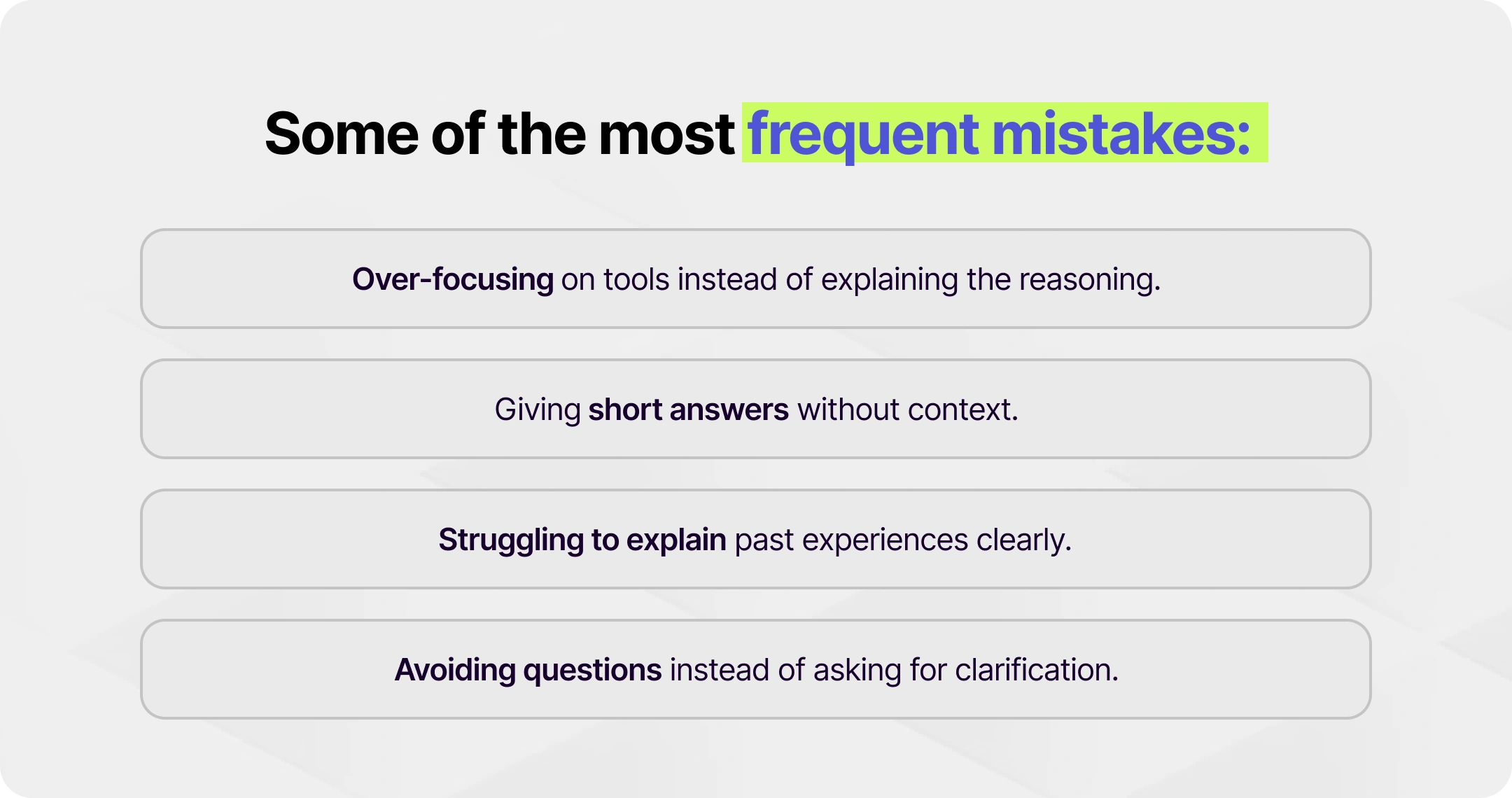
We’ve seen situations where three candidates showed up for an interview with similar backgrounds, but only one stood out simply because they communicated their thought process better.
What U.S companies value most in a candidate
Working with our clients has shown us that hiring decisions are rarely based on technical ability alone.
Based on hundreds of interviews and client conversations, U.S. companies consistently look for:
- Clear communication in technical and non-technical contexts
- Ability to collaborate across cultures and time zones
- Confidence when answering technical interview questions
- Curiosity and willingness to learn
They also appreciate candidates who come prepared with thoughtful questions to ask the interviewer. Asking the best questions to ask in an interview shows genuine interest in the role and a proactive mindset.
Preparing for interviews with U.S. clients
Preparation is where many candidates unlock their full potential. This is also where Devlane plays an active role, not only as a staff augmentation partner but as a long-term career ally. Beyond evaluation, we actively prepare candidates for these conversations. This includes:

Preparation isn’t about memorizing answers. It’s about building confidence and understanding what interviewers are really listening for.
Interviews are a two-way conversation
From a client’s perspective, interviews are also about assessing mutual fit, alignment, and long-term collaboration.
A strong interview is not an interrogation. Candidates should feel comfortable asking questions to understand the project, the team, and expectations.
Some of the best questions to ask in an interview include:
- How does success look in the first 90 days?
- How does the team collaborate across locations?
- What challenges is the team currently facing?
These questions help candidates stand out and make better decisions about their next role.
Final Thoughts
From my perspective as a technical recruiter, these patterns are remarkably consistent across roles, industries, and seniority levels.
Interviewing for roles at U.S. companies can be a career-defining opportunity, but success depends on much more than knowing the right answers.
Preparing for a technical interview means understanding that technical knowledge is only part of the equation. Communication, clarity, ownership, and real seniority play a critical role in hiring decisions.
We see this pattern consistently across interviews and roles. Our role is not only to connect companies with top LATAM talent, but also to support candidates throughout the interview process so they can show their full potential.
If you’re a LATAM-based engineer looking for opportunities with U.S. companies, explore our open roles on our Careers page. And if you’re building your tech team and looking for trusted nearshore talent, we’d love to connect.

Other Blog Posts
.webp)
How to Build an AI Agent for Production