
gRPC is an open-source, high performance Remote Procedure Call (RPC) framework that allows applications to communicate efficiently across different environments. REST (Representational State Transfer) is an architectural style for designing networked applications. It uses standard HTTP methods to enable communication between clients and servers.
Although both technologies are used for communication between applications, they take very different approaches. Before comparing their strengths, weaknesses, and ideal use cases, it's helpful to understand the fundamentals of how each one works.
Key Insights
- REST is usually the simpler choice for public APIs and browser-facing applications.
- gRPC is particularly strong for internal service-to-service communication, typed contracts, and streaming.
- gRPC often outperforms REST because Protobuf produces smaller payloads and requires less serialization overhead.
- Performance alone shouldn't determine whether you choose gRPC or REST.
- For many CRUD applications and lower-traffic APIs, REST remains the more practical option.
How do gRPC and REST work?
In gRPC, a client can directly call a method on the server application, similarly to other RPC systems. gRPC requires an interface with methods that can be called remotely, including their parameters and return types. The server implements this interface and runs the gRPC service to handle client calls. On the other side, the client has a stub that provides the same methods as the server.
This approach hides most of the networking details from the application developer. The client does not need to manually build HTTP requests or parse responses, as the generated client stub handles serialization, communication, and deserialization automatically.
By default, gRPC uses Protocol Buffers (Google's open-source mechanism for serializing structured data) to communicate. Both the client and server share the same service contract, which is defined in a .proto file. This contract specifies the available RPC methods and all request and response message formats, allowing code to be generated automatically for multiple programming languages.
Here is an example of a service definition:
Instead of making REST calls like:
GET /payment-methods
POST /payment-methods
A gRPC client invokes methods directly:
REST works differently. Instead of exposing methods, it exposes resources identified by URLs. Clients interact with those resources using standard HTTP methods such as GET, POST, PUT, PATCH, and DELETE. Each request is independent and contains all the information the server needs to process it.
For example, the client would send an HTTP request to /payment-methods to retrieve the list of payment methods, or send a POST request with a JSON body to create a new one. The server interprets the HTTP method, processes the request, and returns an HTTP response with an appropriate status code (such as 200 OK, 201 Created, or 404 Not Found) together with the response body.
REST does not require a predefined contract to function. Specifications such as OpenAPI can be used to define the contract, but they are optional. This makes REST easier to consume from browsers and command-line tools.
gRPC vs REST: Type Safety and API Contracts
As we could see from the previous example, REST encourages thinking in terms of resources, while gRPC seems more like calling methods of a different object. A major advantage of gRPC is type safety. For example, imagine a REST endpoint expects an integer:
The client intended to send the number 1 but instead sent the string "1". Depending on the framework, this might be automatically converted, rejected with a validation error, or only discovered at runtime when the app receives the request. With gRPC, the schema defines the expected types beforehand:
The schema defines the expected types, allowing many mismatches to be caught before the application runs. Another advantage of gRPC is client generation. Instead of manually creating requests such as: GET /payment-methods, parsing the JSON response, and mapping it into your application's models, you can simply write:
The client library is generated automatically from the .proto file, giving you strongly typed methods with IDE completion and compile-time checks. This also means less boilerplate code and fewer opportunities for serialization or parsing errors.
Documentation
Another advantage of having a shared .proto contract is that documentation can be generated directly from it. Different tools can generate documentation based on Protocol Buffer definitions. However, this documentation is usually more focused on the service contract itself.
REST APIs often use tools such as OpenAPI and Swagger UI, which provide interactive documentation where developers can inspect endpoints, build requests, and test them directly from the browser. For developers exploring an API for the first time, this can make REST APIs easier to understand and experiment with.
Debugging
One of REST's biggest advantages is how easy it is to debug. You can simply make an HTTP call:
And you're done. Since REST typically uses plain HTTP and JSON, almost any browser, terminal, or HTTP client can be used for debugging and testing.
With gRPC, things are slightly different.Because requests are encoded using Protocol Buffers and communication usually happens over HTTP/2, we normally need tools such as grpcurl, BloomRPC, or an IDE extension to inspect and invoke RPC methods. Postman also supports gRPC, allowing developers to import a .proto file and invoke gRPC methods. REST is generally easier to inspect manually, while gRPC relies more heavily on specialized tooling.
Versioning
REST APIs commonly expose different versions through the URL:
/v1/payment-methods
/v2/payment-methods
This approach is simple and explicit, but maintaining multiple API versions can become difficult as the application grows. In gRPC, protocol buffers are designed with backward compatibility in mind, for example:
- Field numbers should not be reused.
- Removed fields can be marked as reserved.
- New fields can be added without breaking older clients when compatibility rules are followed.
As long as these rules are followed, clients with older versions of the schema can continue communicating with servers even if they have newer versions, so endpoint versioning is often not needed.
Error handling
In REST, errors are represented using HTTP status codes are really simple and well known, for example:
- 404 Not Found
- 401 Unauthorized
- 500 Internal Server Error
On the other hand gRPC uses is own codes, for example:
- NOT_FOUND
- INVALID_ARGUMENT
- UNAVAILABLE
- PERMISSION_DENIED
They are richer and map in the same way across languages (you can find the full list in https://grpc.io/docs/guides/status-codes/)
Team development
With REST, the API contract is often documented separately using tools such as OpenAPI or Swagger. While this works well, the implementation and documentation can get out of sync if they are maintained independently. With gRPC, the .proto file acts as the contract.
Backend services, clients, and other applications can generate code from the same source of truth. This reduces misunderstandings between teams, eliminates a significant amount of manual client code, and makes breaking changes more visible during development.
For larger distributed applications, these decisions are also closely connected to the overall API and microservices architecture and how services are designed to interact.
gRPC vs REST Performance
One of the first things we hear about gRPC is performance. Generally, it's true that gRPC can outperform REST in many scenarios. But the more important question is whether those performance gains actually matter for your application. Why is gRPC faster than REST in many cases?
Protocol Buffers
Protocol Buffers use binary serialization, which typically produces smaller payloads and requires less parsing than JSON. For example:
A binary Protobuf message can represent the same information much more compactly, although it is not human-readable.
HTTP/2
This is another reason, using features like multiplexing, header compression and persistent connections, http/2 definitely helps but the strongest difference is made by protocol buffers and serialization
But, when performance matters? In my experience, I would choose gRPC over REST in some specific scenarios:
- High Load microservices
- Real time services
- IoT
- Financial systems
- ML inference
For example, financial applications often require high-throughput communication, reliability, and scalable architectures, which can make gRPC particularly useful. You can see similar architectural considerations in fintech software development.
However, I probably wouldn't use gRPC just for the sake of performance in CRUD applications, admin panels, small SaaS products, or APIs with relatively low traffic. Database queries, external API calls, caching, and application logic are often much larger bottlenecks than JSON serialization.
If your API spends 100 ms waiting for the database, reducing serialization time from 2 ms to 0.5 ms will probably not improve the user experience in a meaningful way. Performance also depends on the rest of the system. A scalable backend architecture can have a much greater impact than choosing one communication protocol over another.
Streams
While performance often gets the spotlight, the real gRPC feature that makes a difference is native streaming support, in the traditional request/response model.
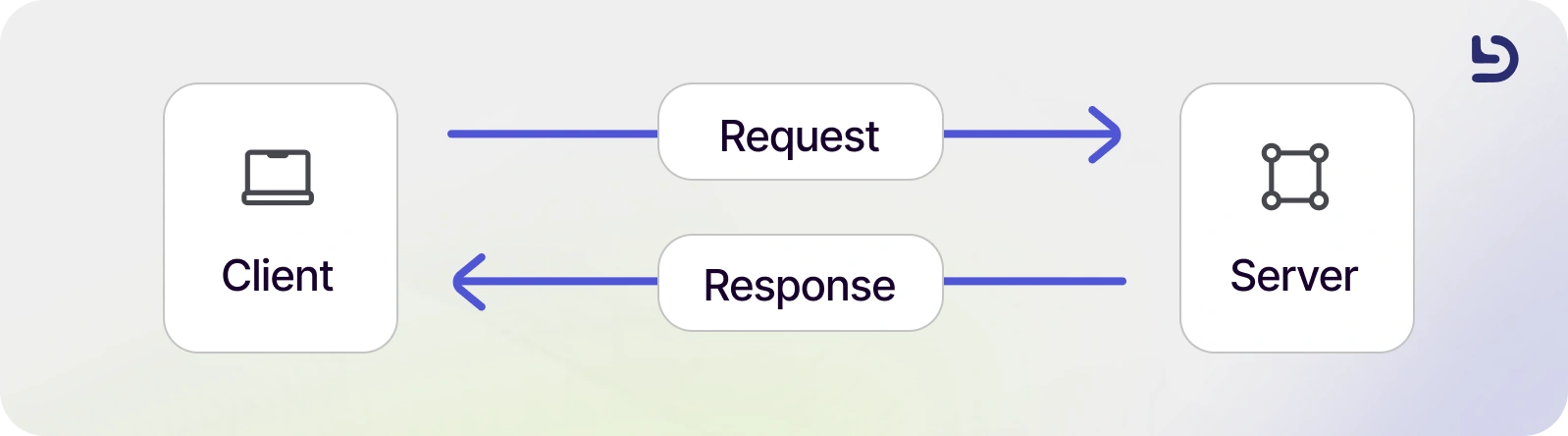
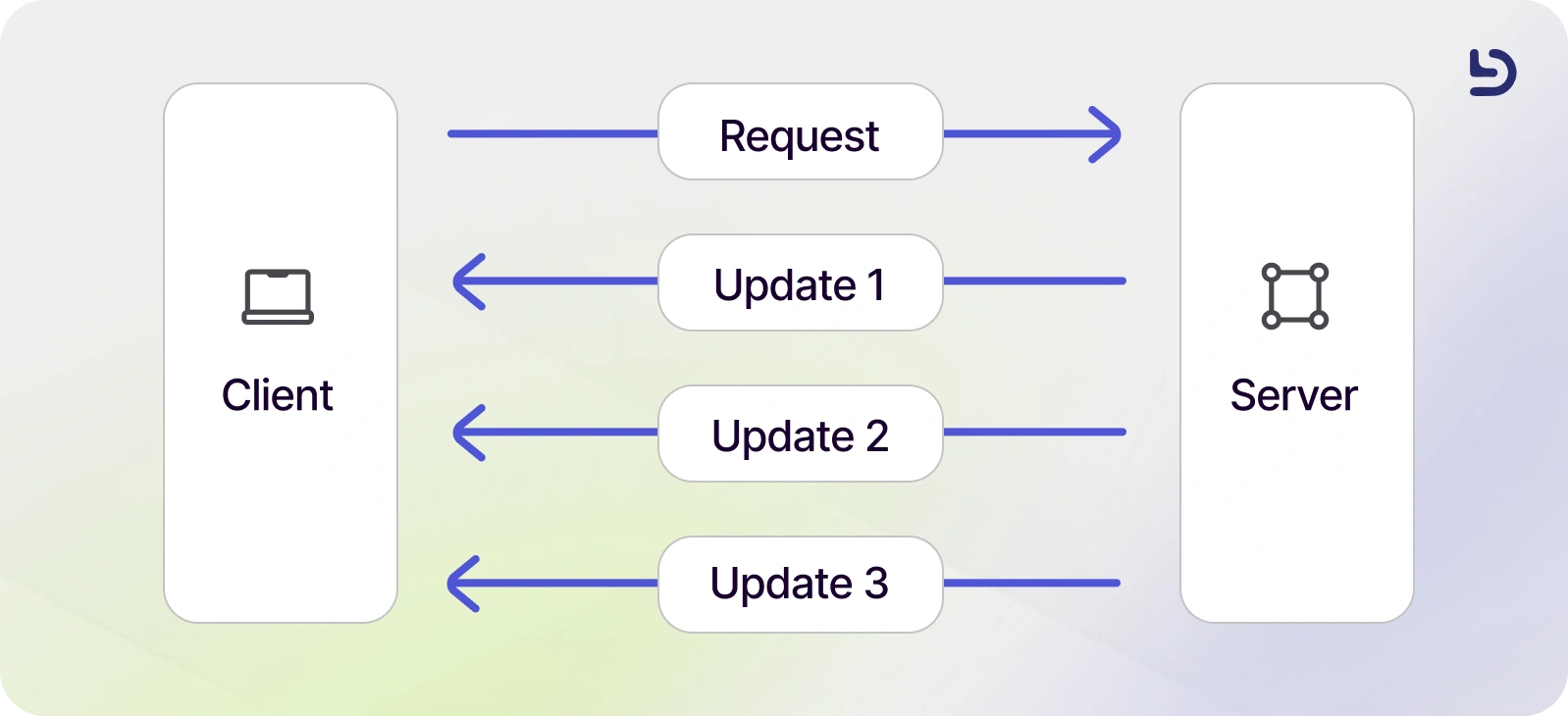
One request, then one response and the connection ends. gRPC support this, but on top of that adds native streaming: Server streaming RPCs where the client sends a request to the server and gets a stream to read a sequence of messages back. The client reads from the returned stream until there are no more messages.
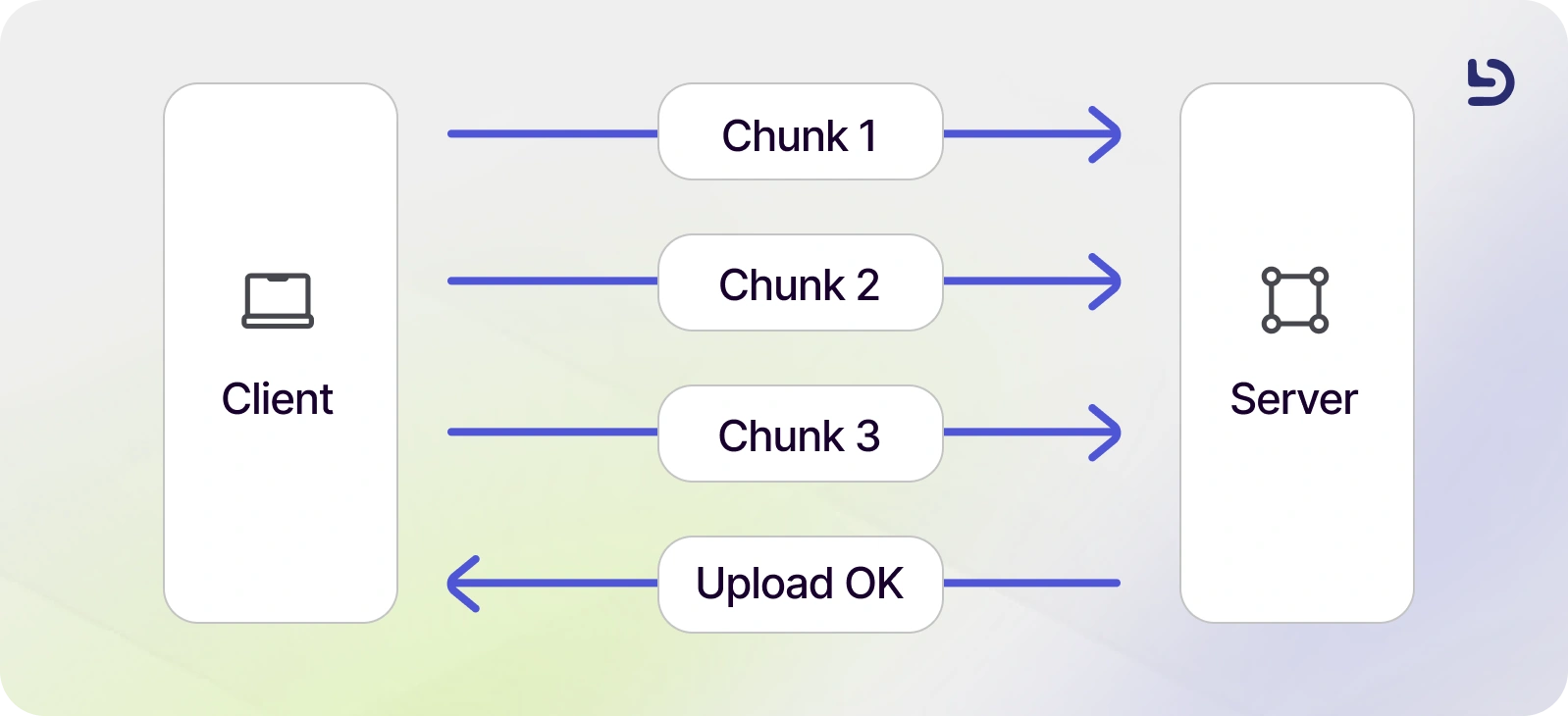
Client streaming RPCs where the client writes a sequence of messages and sends them to the server, again using a provided stream. Once the client has finished writing the messages, it waits for the server to read them and return its response.
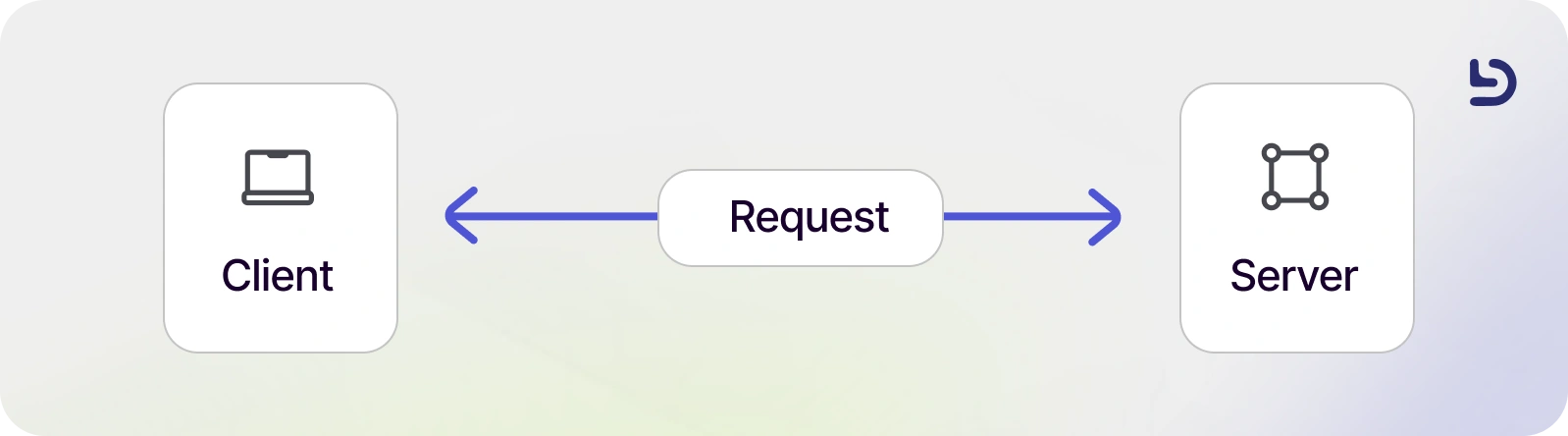
Bidirectional streaming: RPCs where both sides send a sequence of messages using a read-write stream. The two streams operate independently, so clients and servers can read and write in whatever order they like: for example, the server could wait to receive all the client messages before writing its responses, or it could alternately read a message then write a message, or some other combination of reads and writes. The order of messages in each stream is preserved.
Rest can also achieve similar user experiences, but usually using additional technologies like polling, long polling, SSE or websockets, main difference is these aren't built into REST itself in the same way streaming is built into gRPC.
Streaming can be useful for real time dashboards, telemetry, live metrics, event processing, video metadata, build logs, and others. Meaning streaming isn't always the right answer, it adds more complex server implementations with long lived connections, it's a powerful feature, but it comes with operational considerations.
If your application naturally exchanges a continuous flow of information instead of isolated requests, gRPC streaming leads to a more efficient design than repeatedly issuing http requests.
Conclusion
Choosing between gRPC and REST isn't about finding a universal winner. It's about selecting the right tool for the problem you're trying to solve.
REST remains an excellent choice for public APIs, browser applications, and services where interoperability and easy debugging are priorities. gRPC is often a better fit for internal service communication, high-performance distributed systems, strongly typed contracts, and applications that benefit from native streaming.
Ultimately, the gRPC vs REST decision shouldn't come down to which protocol looks faster in a benchmark. The best protocol is the one that matches your application's architecture, communication patterns, and actual requirements.
If you're designing or scaling APIs, microservices, or backend systems, At Devlane, we can help you build the right architecture for your product.

Frequently Asked Questions
What is gRPC vs REST?
gRPC and REST are two approaches to communication between applications. REST organizes APIs around resources and standard HTTP methods, while gRPC allows clients to invoke remote methods defined through a shared service contract.
Why is gRPC faster than REST?
gRPC can be faster because Protocol Buffers typically produce smaller payloads and require less serialization overhead than JSON. It also uses HTTP/2, which provides features such as multiplexing, persistent connections, and header compression. The actual performance difference depends on the application.
Why use gRPC over REST?
gRPC can be useful when you need strongly typed contracts, automatic client generation, efficient service-to-service communication, or native streaming.
Does gRPC use HTTP/2?
Yes. Standard gRPC uses HTTP/2 as its transport layer.
Is gRPC better than REST?
Neither is universally better. REST is often more practical for public and browser-facing APIs, while gRPC can be a stronger fit for internal services, distributed systems, and streaming applications.

Other Blog Posts
.webp)
How to Build an AI Agent for Production