Unlock LATAM’s Tech Talent: Your 2025 Guide to Nearshore Staff Augmentation

What if you had a roadmap to access top-tier tech talent in LATAM?
The Path to LATAM’s Tech Talent provides actionable strategies to scale your software team in 2025. With insights into nearshore solutions, cost-effectiveness, and world-class engineering, this guide helps you unlock the talent your client company needs.
Globally, the intense demand for software engineers continues to outstrip the available supply, leaving many companies grappling with how to scale their teams efficiently without breaking their budgets.
If your organization is among them, our ebook, “The Path to LATAM’s Tech Talent: Nearshore Staff Augmentation in 2025,” offers a comprehensive roadmap to leverage the growing pool of world-class engineers in Latin America through software outsourcing and outstaffing models.
Why LATAM Is a Smart Choice for Software Development
Latin America is rapidly emerging as a hub for high-performing remote teams and external teams, providing key advantages for North American companies:
- Cost-effectiveness: Save up to 55% on salaries compared to U.S. standards while maintaining exceptional quality.
- Real-time collaboration: With minimal time zone differences, nearshore software development enables smooth integration and communication.
- World-class talent: Latin American engineers are highly skilled, adaptable to North American corporate culture, and fluent in English — ideal for long-term collaboration with your client company.
- Cultural alignment: Similar business ethics and communication styles reduce friction and increase productivity across borders.
These factors have positioned LATAM as the preferred destination for companies seeking scalable engineering capacity without the communication and coordination challenges often found in offshore regions.
Understanding Outstaffing vs Outsourcing
Before choosing a partner, it’s essential to understand the difference between outstaffing vs outsourcing, two terms often used interchangeably but representing distinct approaches.
- In outsourcing, a company delegates an entire project or function to an outsourcing company, which takes full responsibility for delivery. This model works best for non-core or temporary projects where internal control is less critical.
- In outstaffing, on the other hand, you hire dedicated professionals through a partner who become an extension of your in-house team. The external team works under your direct management while the provider handles payroll, compliance, and HR logistics.
This staff augmentation model allows companies to scale quickly, maintain control over processes, and ensure alignment with their culture and long-term goals.
Choosing between software outsourcing and outstaffing depends on your priorities, whether you need complete delegation or prefer to strengthen your existing remote team with additional experts.
Why Should You Read “The Path to LATAM’s Tech Talent”?
This ebook isn’t just another resource on outsourcing; it’s a practical toolkit designed for decision-makers who want to build stronger, more agile teams across borders.
Here’s what you’ll find inside:
- Insights into the global talent crisis: Explore how rising demand, remote work, and post-pandemic trends are redefining how companies hire and retain engineers.
- Comparative analysis: LATAM vs. India and Eastern Europe: Learn why nearshore staff augmentation from Latin America offers advantages in proximity, collaboration, and cultural fit.
- Comprehensive breakdown of engagement models: Understand the full spectrum of outsourcing models, from project-based outsourcing and managed services to outstaffing and hybrid solutions.
- Best practices for managing remote teams: Discover strategies for communication, time zone alignment, and cultural integration to maximize team performance.
Each section provides actionable recommendations for scaling your client company’s development capacity while maintaining flexibility, transparency, and control.
The Real Value of Nearshore Staff Augmentation
What makes nearshore staff augmentation stand out among other outsourcing models is its hybrid nature, combining the efficiency of external talent with the control of internal management.
For companies in the U.S. or Canada, working with a LATAM remote team means overlapping time zones, shared language proficiency, and cultural compatibility. Unlike offshore outsourcing to Asia, nearshoring enables real-time collaboration, ensuring your software development projects stay aligned with evolving priorities.
Furthermore, the outstaffing model fosters long-term relationships between your internal leaders and external engineers. Instead of handing off a project, you build a distributed culture where everyone works toward shared goals.
The result: greater continuity, stronger communication, and better knowledge retention across projects.
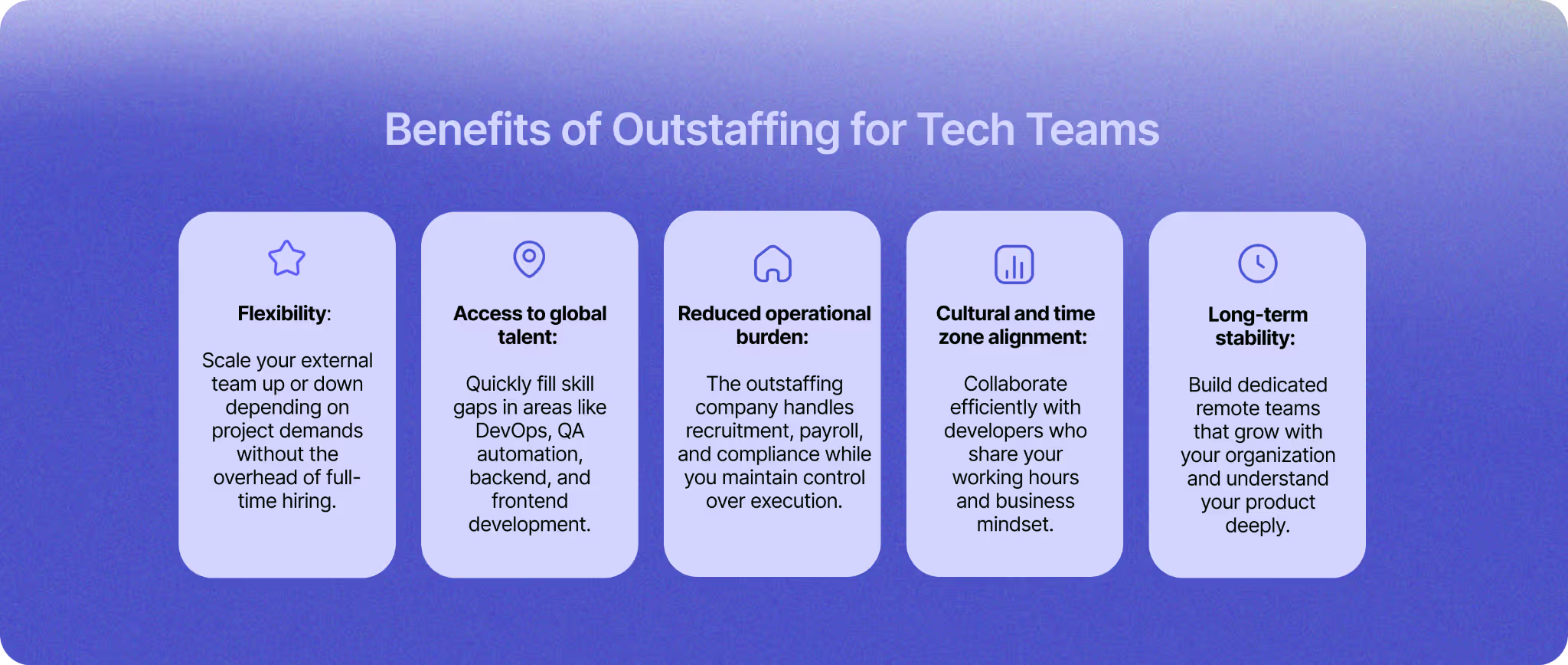
This approach helps tech leaders retain agility while ensuring high-quality software delivery.
From Outsourcing Challenges to Nearshore Advantages
Traditional outsourcing often leads to communication barriers, delayed feedback loops, and reduced visibility into project progress.
By contrast, nearshore outstaffing transforms those challenges into opportunities:
- Closer collaboration: Teams in LATAM work in real time with U.S. clients, eliminating late-night calls or asynchronous bottlenecks.
- Higher accountability: Engineers become embedded in your daily workflows, sharing the same goals and KPIs.
- Cultural synergy: Shared professional values and communication styles foster trust and innovation.
This shift from transactional outsourcing to collaborative team extension represents the future of software development partnerships.
Practical Tips for Managing Remote Teams Effectively
Building a successful remote team requires more than talent, it takes structure, communication, and leadership.
Here are some best practices to ensure your outstaffed team thrives:
- Set clear goals and expectations: Define measurable outcomes, sprint goals, and milestones from the start.
- Encourage open communication: Use collaborative tools like Slack, Notion, or Jira to ensure transparency.
- Align on culture: Share your client company’s values and processes so that every member feels part of the same mission.
- Prioritize continuous learning: Invest in professional growth programs to keep engineers motivated and engaged.
- Foster inclusion: Celebrate wins and encourage feedback loops to build a strong sense of belonging, even across borders.
When managed effectively, outstaffed teams deliver not just results but long-term innovation.
LATAM’s Strategic Advantage
Latin America’s rise as a software outsourcing destination is no accident. Governments and private sectors have invested heavily in education, connectivity, and tech ecosystems.
Countries like Argentina, Uruguay, Colombia, and Mexico boast thriving developer communities that combine technical excellence with cultural compatibility for North American markets.
This makes LATAM not only a cost-effective option but a strategic advantage for companies seeking sustainable growth through staff augmentation and outstaffing models.
By 2025, the region is expected to play an even larger role in the global tech landscape, becoming the go-to hub for companies balancing innovation, quality, and speed.
Who Is This Guide For?
This guide is perfect for CEOs, CTOs, Tech leaders and HR executives who are:
- Looking to expand their teams with top-tier talent.
- Seeking a cost-effective alternative to traditional hiring models.
- Interested in learning how nearshoring can align with their company’s strategic goals.
The global tech talent shortage doesn’t have to hold you back.
With the insights and strategies outlined in this guide, your client company can overcome hiring bottlenecks and unlock the full potential of nearshore software development.
Choosing between outsourcing and outstaffing is not just a budget decision, it’s a strategic one that impacts control, collaboration, and long-term success.
If you’re ready to scale your remote team efficiently, maintain visibility, and access top LATAM engineers, nearshore outstaffing is your competitive edge for 2025 and beyond.
Download your free copy now and start building the engineering team your company needs to stay ahead.

Other Blog Posts

gRPC vs REST: Performance, Architecture, and Use Cases

.webp)